
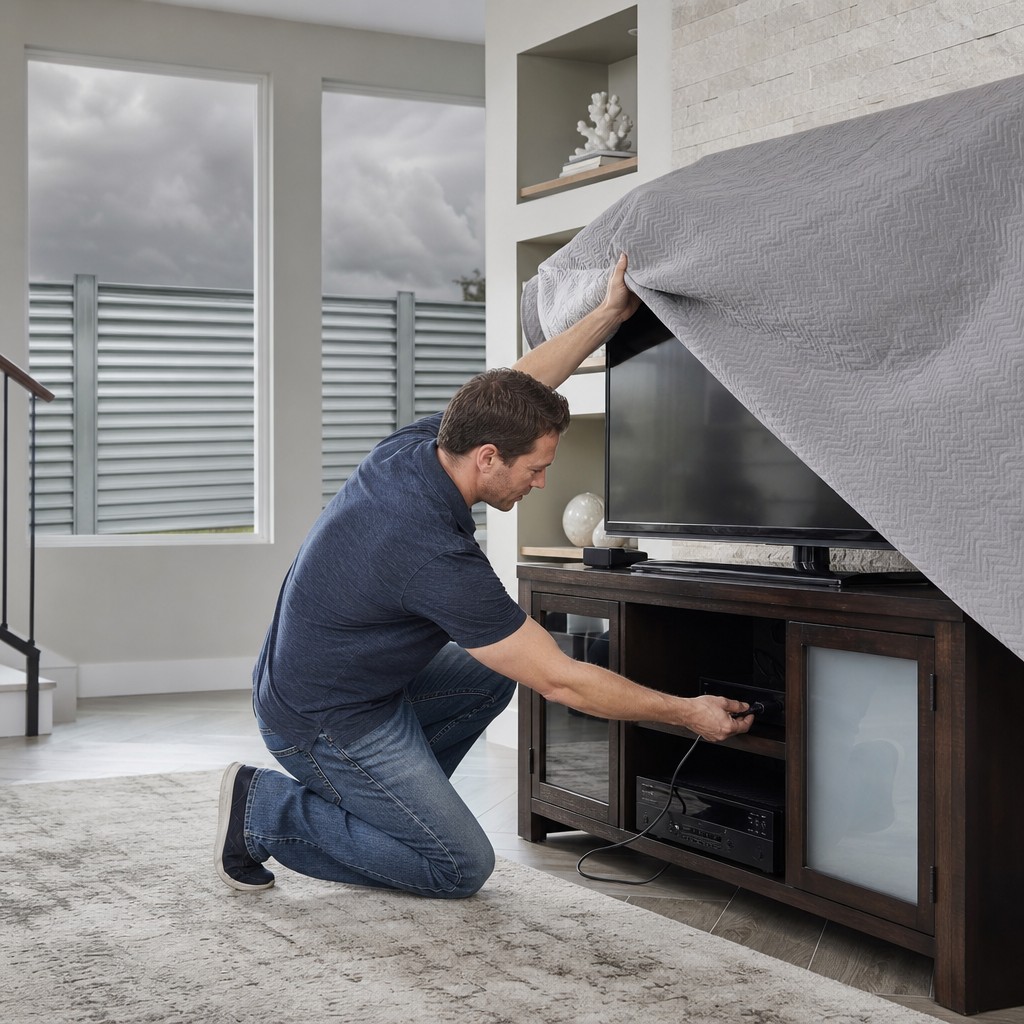
Tampa Bay homeowners with AV and smart home systems have a specific risk most of the country doesn't have to plan around: hurricane season. Power surges from grid switching during storms, direct lightning strikes, and extended outages all pose real risk to AV equipment, networking gear, and smart home controllers — and the damage is often preventable with fairly modest preparation.
Why Surges Are the Real Threat (Not Just Outages)
A clean power outage, where power simply stops and comes back later, is relatively harmless to most electronics. The actual damage during storm season more often comes from surges — sudden voltage spikes that happen when power is restored, when the grid switches between sources, or from a nearby lightning strike traveling through power or cable/network lines. A single significant surge can silently damage a receiver, a smart home controller, or networking equipment in a way that isn't obvious until it fails weeks later, or destroy it outright and immediately.
Whole-Home Surge Protection vs. Point-of-Use
Point-of-use surge protectors (the power strips most people already use) protect whatever's plugged directly into them, but only from surges entering through that specific outlet — they do nothing for surges entering through cable, network, or phone lines, and they have a limited absorption capacity that degrades with each surge event over time, often without any indication they've been "used up."
Whole-home surge protection, installed at the electrical panel by a licensed electrician, protects everything in the house at the service entrance point — the first line of defense before a surge ever reaches individual outlets. For a home with any meaningful AV or smart home investment, whole-home protection paired with point-of-use protection for the most sensitive/expensive equipment (AV receivers, smart home controllers, networking gear) is the standard recommended approach, not an either/or choice.
Don't Forget Cable and Network Lines
A significant number of surge-related equipment failures come in through coaxial cable or network/phone lines, not the electrical outlet — a path point-of-use power strip protection doesn't cover at all. Surge protectors rated for cable/coax and network (Ethernet) pass-through exist specifically for this and are worth adding anywhere a cable or network line enters equipment that also has a power surge protector — protecting the power path while leaving the data path exposed defeats much of the purpose.
Backup Power for Critical Networking Gear
A UPS (uninterruptible power supply) on your router, modem, and any central networking equipment does two things: it provides clean, filtered power (an additional layer of surge protection beyond dedicated surge protectors) and it keeps your network running through brief outages or the moments during grid power restoration when surges are most likely. For smart home systems where security cameras, door locks, or monitoring depend on network connectivity, this matters even during outages when you might most want that system still working.
Pre-Storm Checklist
- Confirm whole-home surge protection is in place — if you don't know, this is worth checking before storm season, not during a hurricane watch.
- Unplug non-essential AV equipment ahead of a direct storm threat. Even with surge protection, unplugging genuinely sensitive/expensive equipment (main AV receiver, primary TV) before a major storm is cheap insurance against a surge large enough to overwhelm protection equipment.
- Verify UPS batteries are actually holding a charge — UPS batteries degrade over time and are easy to forget about until you need them.
- Photograph your equipment and serial numbers before storm season, for insurance documentation purposes if something is damaged.
- Know your equipment's actual value for insurance purposes — a fully built-out AV and smart home system can represent real replacement cost that's worth confirming is covered under your homeowner's policy.
After the Storm
If equipment was exposed to a power event, don't assume "it turned on so it's fine." Some surge damage is progressive — a partially damaged component can work initially and fail weeks or months later. If you experienced a significant surge event (visible arcing, tripped breakers, or a direct lightning strike nearby), having sensitive equipment checked rather than just powered back on is the safer approach, particularly for expensive gear like AV receivers and smart home controllers where a full failure is a costly replacement.
The Bottom Line
Hurricane season doesn't mean AV and smart home investments are inherently risky in Tampa Bay — it means they need the same kind of preparation as anything else exposed to Florida's storm risk. Whole-home surge protection, UPS backup for critical networking gear, and a simple pre-storm routine cover the large majority of realistic risk for a fraction of what replacing damaged equipment would cost.